Your First-Time Guide to Sedona Vortexes, covering Sedona’s most famous energy sites, scenic hikes, mindfulness experiences, and the peaceful landscapes that make this wellness destination so unique.
Sedona Vortex Wellness Travel Guide
Sedona’s red rock landscapes are dramatic enough on their own, but what keeps people returning here is the strange sense that the place carries something heavier, calmer, and somehow harder to explain.
Some call it energy. Others call it peace.
Sedona has become world-famous for its vortexes: specific sites believed to hold concentrated Earth energy that can encourage meditation, emotional clarity, healing, introspection, or creativity.
The idea can sound intensely spiritual or slightly eccentric, depending on who you ask.
But here’s the thing: even skeptics often admit that something about Sedona feels unusually grounding the moment they arrive.
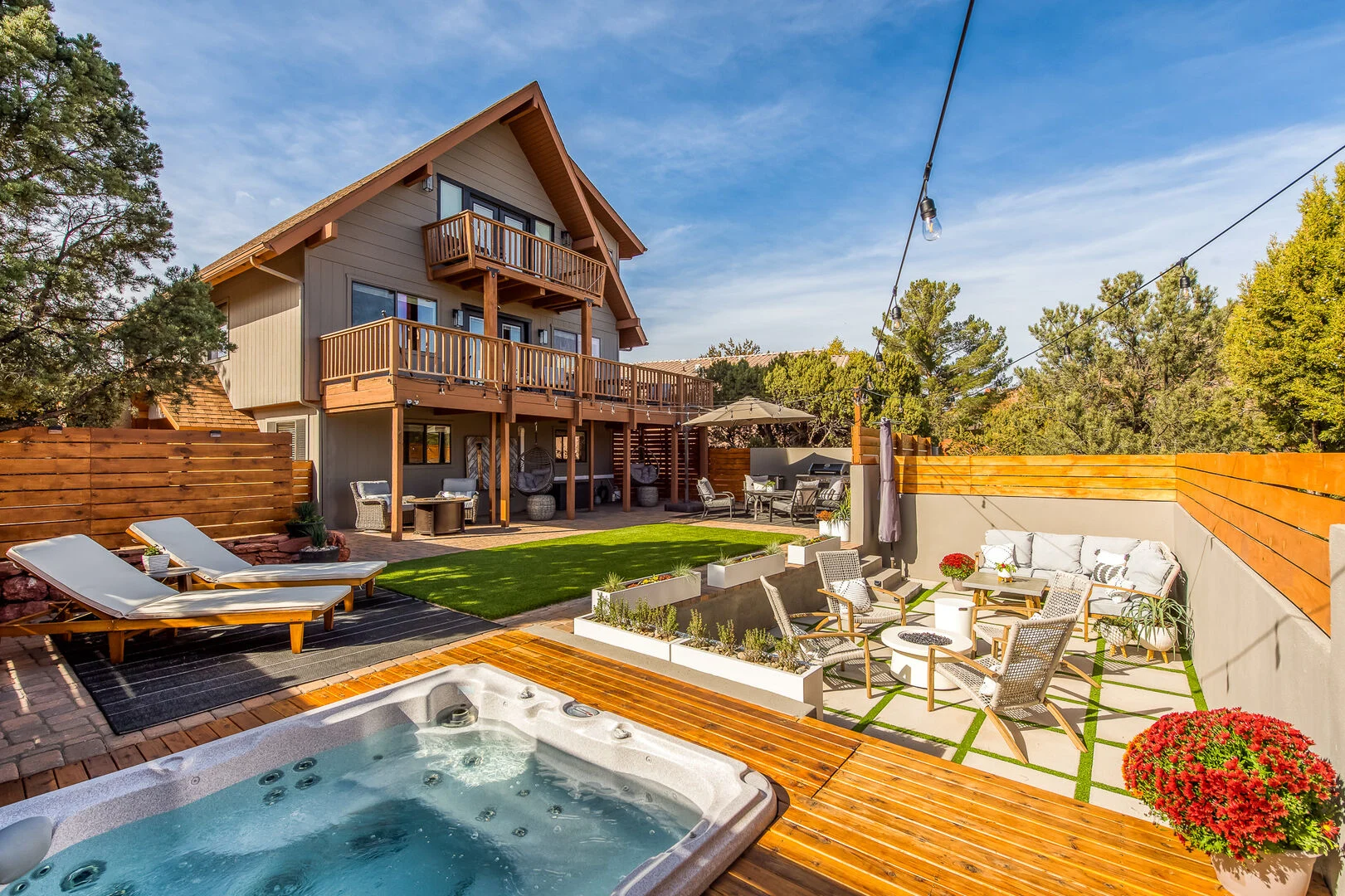
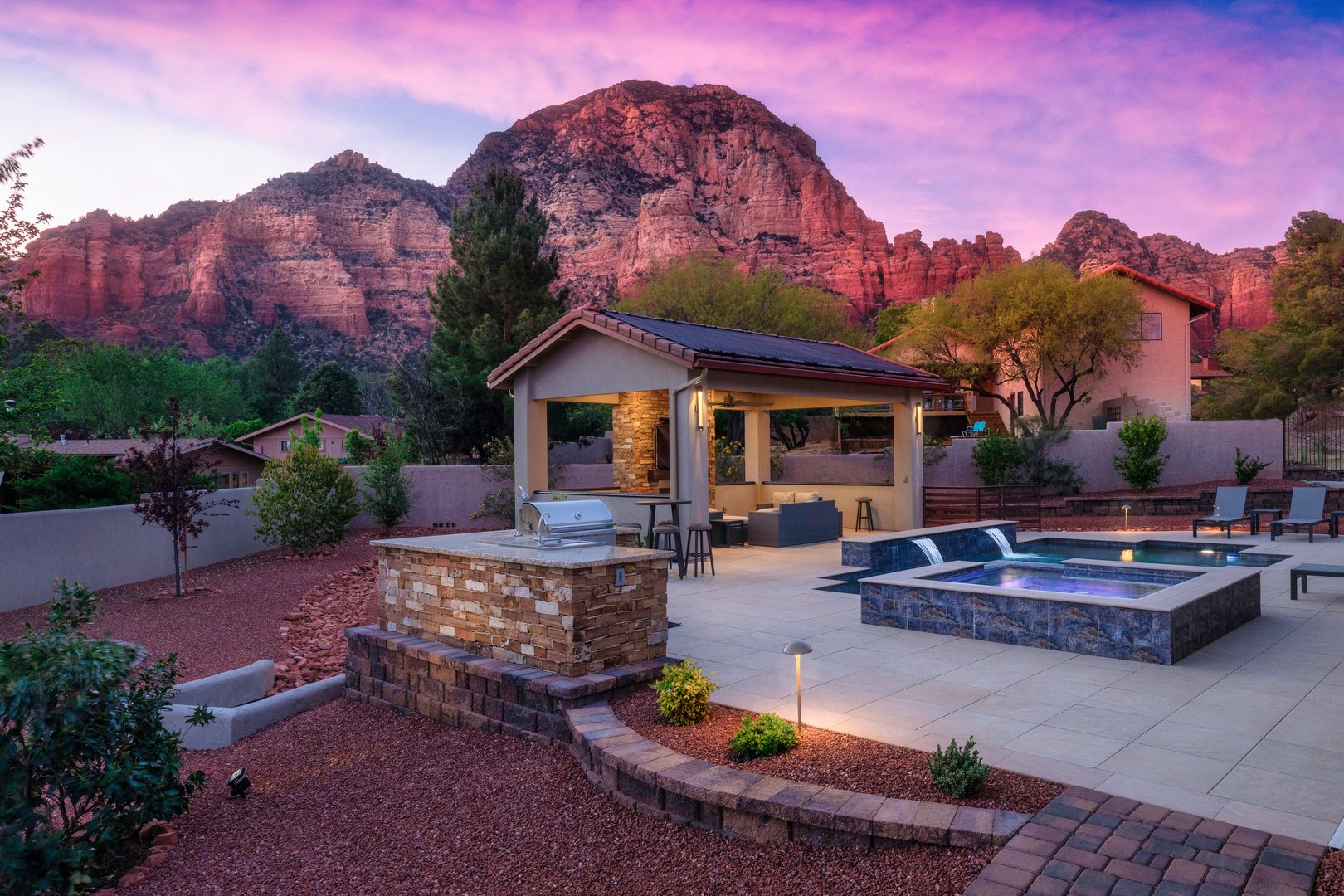
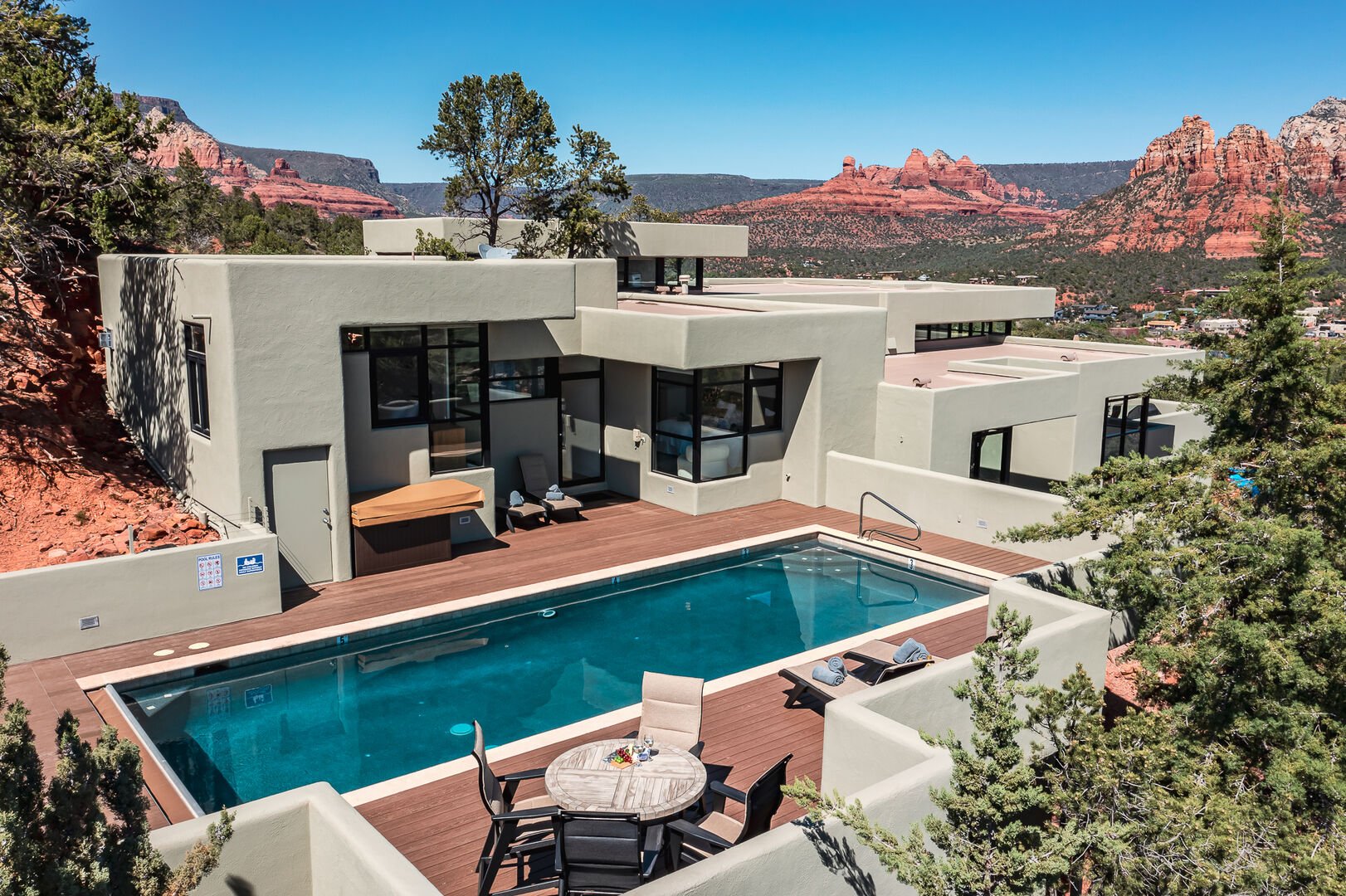
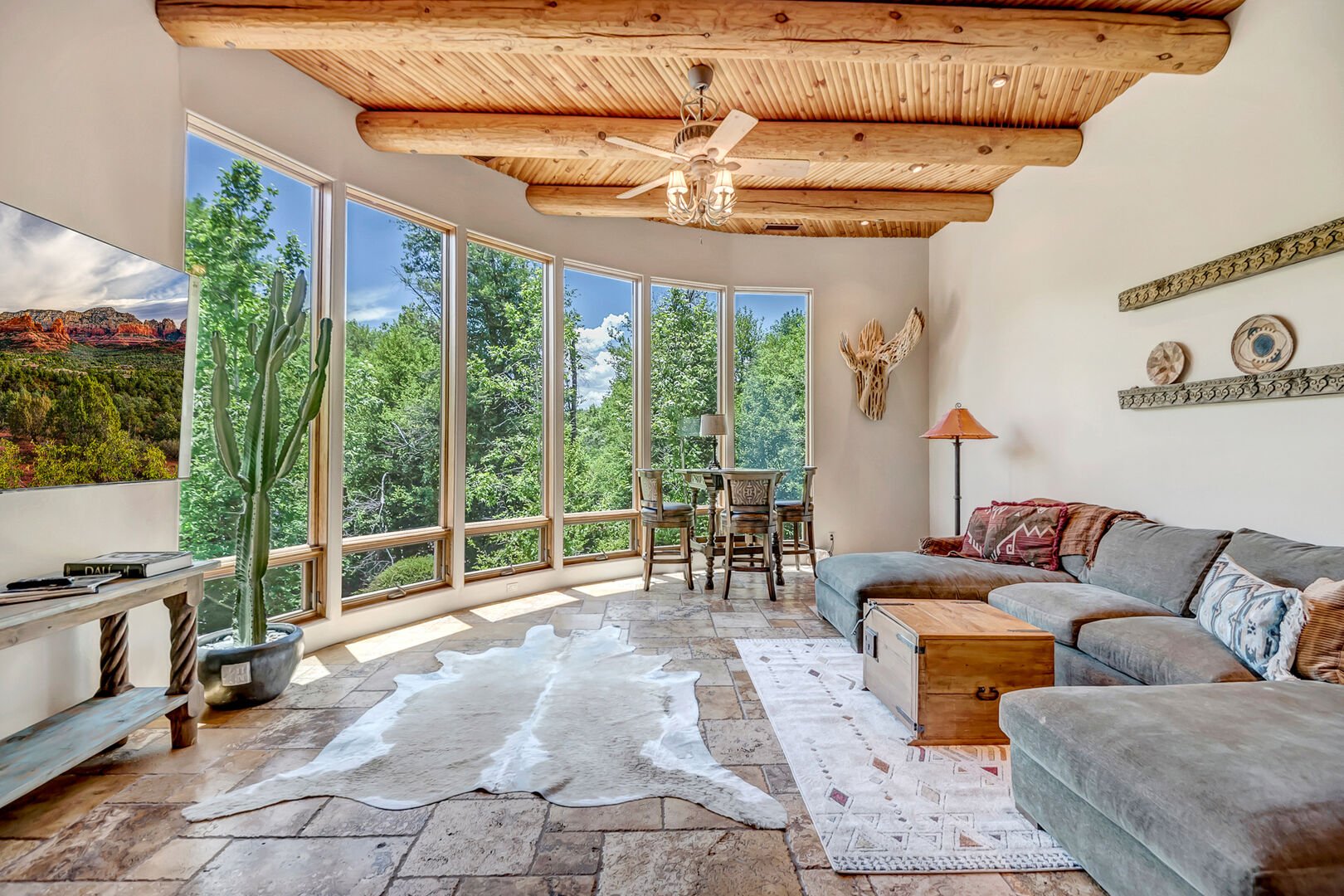
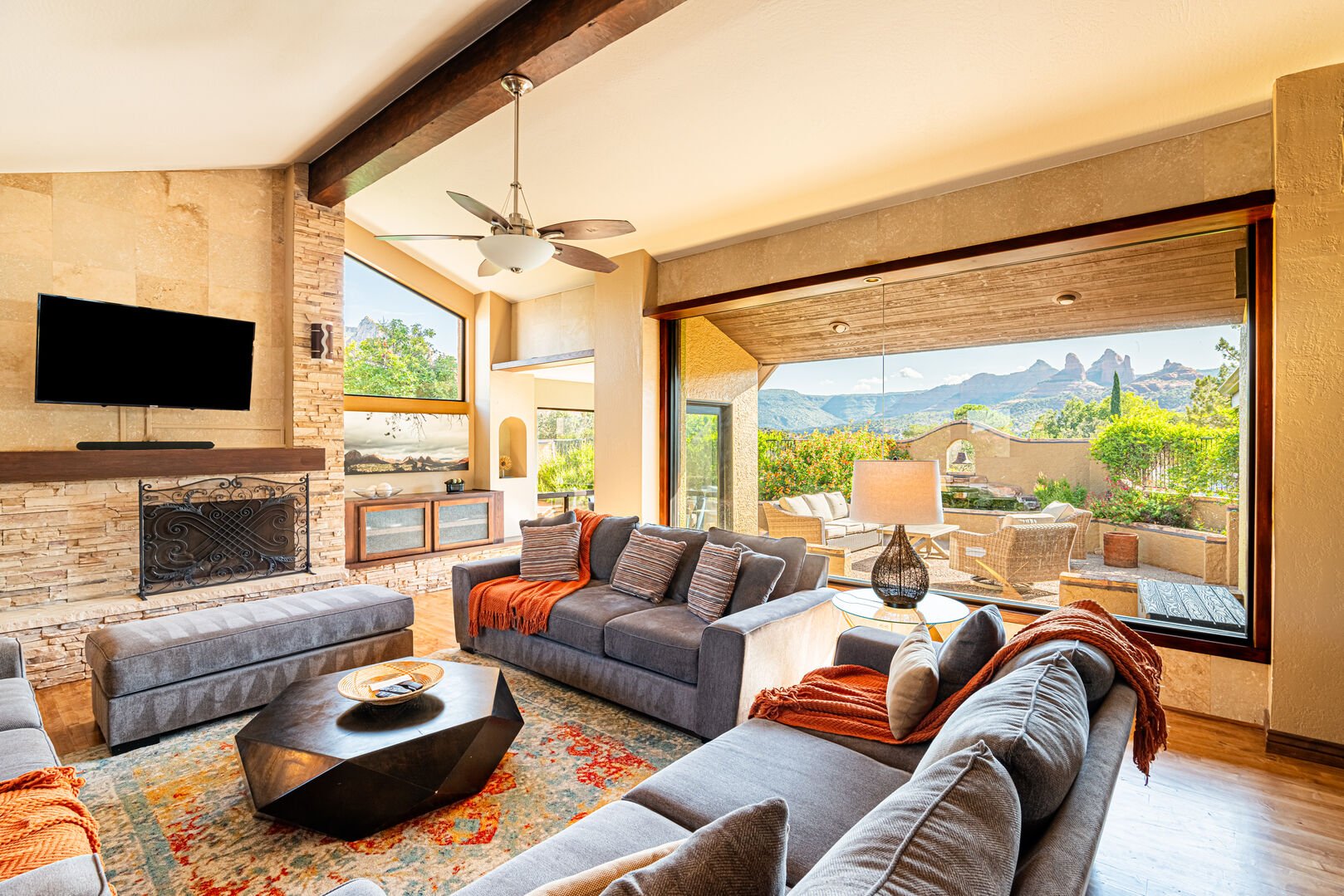
At Sedona.org, we offer a collection of vacation rentals that give you room to spread out, relax, and enjoy the area at your own pace. As experts in all things Sedona, our destination blog is packed with local tips to help you plan an Arizona trip that feels truly personal. From free things to do in Sedona and the best summer activities to a local dining guide, consider this your inside track to the area.
In this guide, we’ll take you through Sedona’s most famous vortex sites, what people actually experience there, and how to make the most of your first visit without overcomplicating the journey.
Here’s the gist:
What Exactly Is a Sedona Vortex
Why Sedona Feels Different
The Main Sedona Vortex Sites
Extra: The Chapel of the Holy Cross
What Does “Upflow” and “Inflow” Energy Mean?
What People Actually Experience
How to Actually Feel the Energy
Extra tips
What Exactly Is a Sedona Vortex?
In simple terms, a vortex is believed to be a location where the Earth’s energy becomes especially concentrated. In Sedona, these areas are thought to form where natural electromagnetic lines intersect through the landscape, creating swirling pockets of intensified energy.
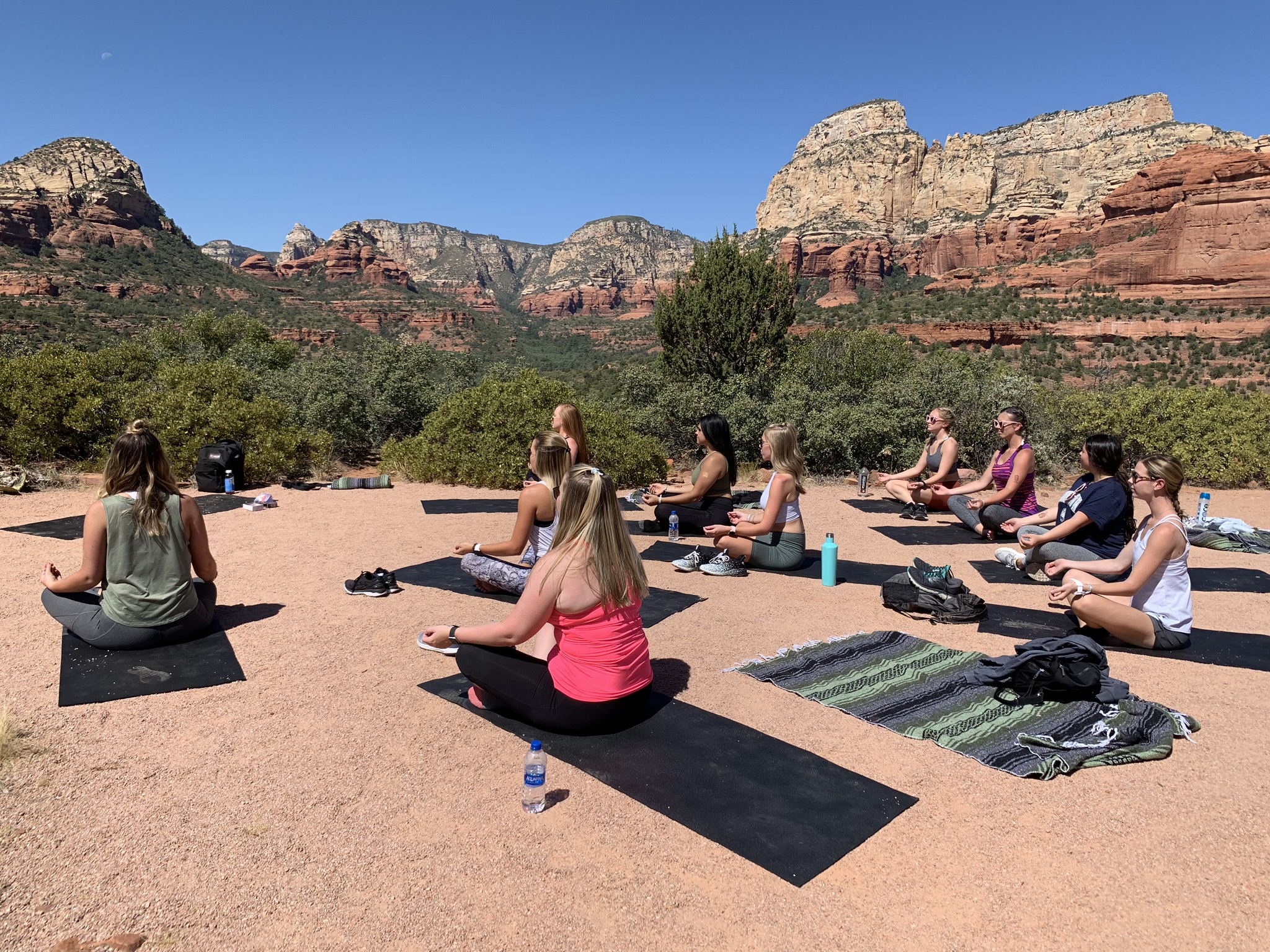
That explanation can sound deeply spiritual or pseudo-scientific depending on your perspective, and Sedona fully embraces both interpretations. Some visitors approach vortexes through meditation, healing work, and spiritual practice. Others prefer thinking of them as unusually calming natural spaces that encourage reflection.
Sedona sits on massive beds of red sandstone rich in iron and quartz, minerals commonly associated with conductivity and amplification. Many believe these minerals help create the energetic sensation visitors describe throughout the region.
Interestingly, the specific word “vortex” did not become widely associated with Sedona until 1979. Before that, these areas were more commonly described as high-energy meditation sites.
The spiritual reputation of the region did not appear overnight. Long before modern tourism arrived, however, Native communities such as the Yavapai already viewed the land as sacred ground connected to a powerful creative force.
What Gives Sedona Its Unique Personality
This is usually the point where first-time visitors become curious. Why does Sedona generate such strong reactions compared to other scenic destinations?
Part of it is visual: the red cliffs, layered canyons, twisted juniper trees, and shifting desert light create landscapes that already feel surreal. But many people describe something more emotional happening alongside the scenery itself.
Visitors frequently report:
A sudden sense of calm
Tingling skin or vibrations
Emotional releases like crying or laughter
Heightened creativity or mental clarity
A strange feeling of “lightness”
Deep relaxation during meditation
Feeling unusually present and quiet mentally
And then there are the skeptics, many of whom insist they felt absolutely nothing supernatural while simultaneously admitting Sedona somehow shifted their mood anyway.
That contradiction defines Sedona pretty well if you ask us.
The Main Sedona Vortex Sites
While locals believe there are more than 100 energetic sites scattered throughout the region, most first-time visitors begin with Sedona’s four major vortex locations.
Each one is believed to carry a slightly different energetic profile. Here’s the lowdown:
1. Airport Mesa
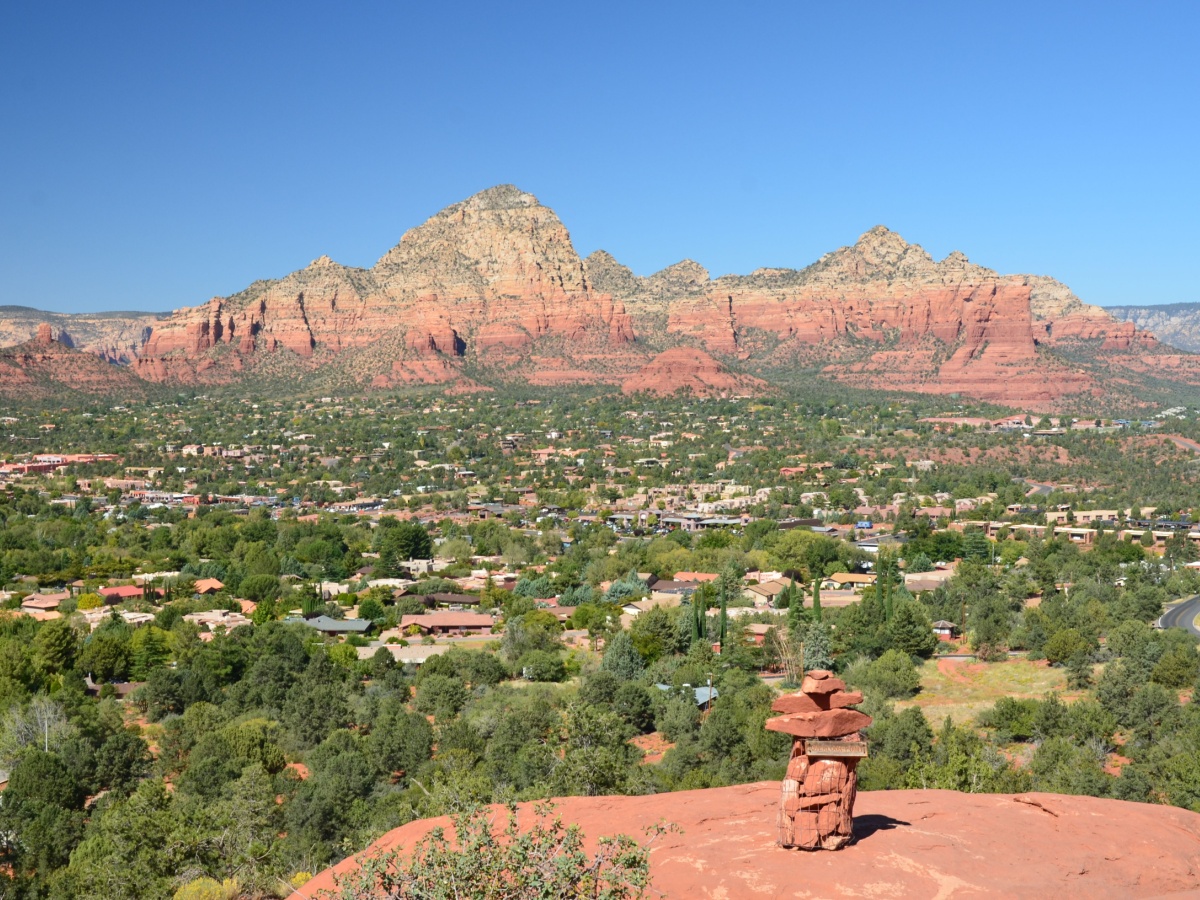
If there is one vortex that works especially well for first-timers, it’s Airport Mesa.
The site is known for “upflow” energy, often described as masculine, motivating, energizing, and future-oriented. It is associated with clarity, stress reduction, and creative thinking. Think momentum rather than introspection.
Airport Mesa is also one of the easiest vortexes to access, which helps explain why it remains so popular. The panoramic views over Sedona’s red rock landscape are extraordinary, especially during sunrise and sunset.
Come here specifically to:
Set intentions
Meditate during sunrise
Watch the sunset
Reflect on future goals
Practice stillness away from daily distractions
Heads up! Because it is accessible and visually dramatic, crowds can become significant, particularly around golden hour. Arriving early helps.
2. Cathedral Rock
Cathedral Rock is probably Sedona’s most iconic formation and one of its most emotionally intense vortex sites.
Unlike Airport Mesa’s active energy, Cathedral Rock is associated with feminine or “inflow” energy. Visitors often describe it as grounding, introspective, nurturing, and emotionally clarifying.
The hike toward the saddle between the rock spires is steeper and more physically demanding than many first-timers expect, but most visitors describe the payoff as worth every step. Once you reach the upper sections, the surrounding scenery becomes incredibly dramatic.
Come here for:
Deep meditation
Emotional release
Quiet introspection
Spiritual connection
Feeling connected to nature itself
3. Bell Rock
Bell Rock tends to attract people looking for balance. The site is believed to combine both masculine and feminine energy, creating a more centered and harmonious atmosphere. Many visitors use Bell Rock as a place to “reset” mentally or emotionally.
The trails here are approachable for beginners, making Bell Rock one of the easiest vortexes to include in a first Sedona itinerary. The broad open landscapes also create plenty of space for quiet reflection without feeling overly isolated.
Bell Rock is particularly popular for:
Meditation
Beginners curious about vortexes
Calm rather than intense
An easier hike
4. Boynton Canyon
Boynton Canyon feels slightly different from the other major vortexes because the atmosphere becomes quieter and more enclosed as you move deeper into the canyon.
The site is strongly associated with ancient energy and spiritual reflection. One of its most famous visual details is the presence of twisted juniper trees, which many locals believe physically demonstrate the swirling energy patterns associated with vortexes.
Whether or not you believe the theory, the trees genuinely look fascinating.
Come to Boynton Canyon if you are seeking:
Solitude
Quiet meditation
A less crowded experience
A stronger connection to nature
A more contemplative atmosphere
Extra: The Chapel of the Holy Cross
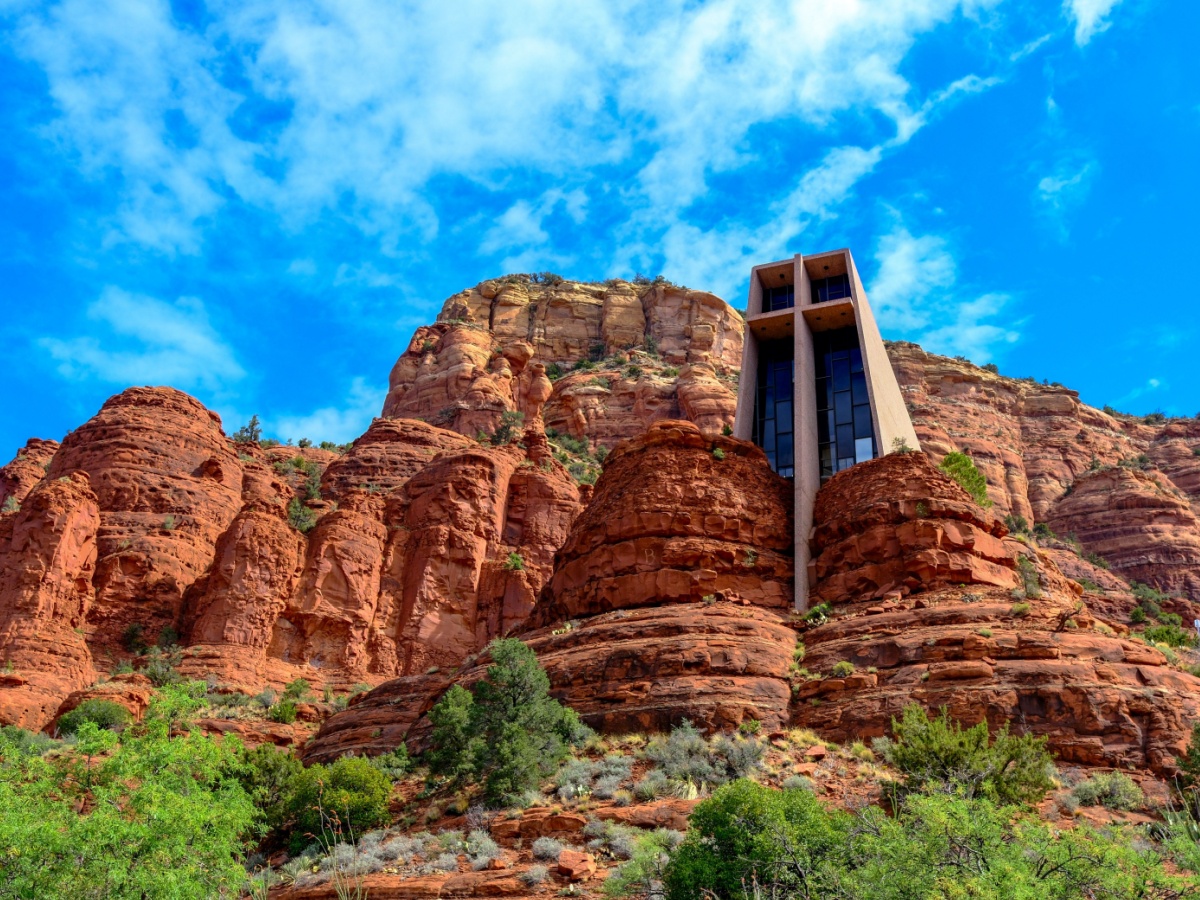
Technically, the Chapel of the Holy Cross is not one of the original natural vortex sites, but many visitors consider it deeply spiritual nonetheless.
Completed in 1956 and dramatically built into the red rocks themselves, the chapel has become one of Sedona’s most recognizable landmarks.
This place is great for:
Quiet reflection
Meditation
Spiritual contemplation
Panoramic views
A peaceful indoor setting
What Does “Upflow” and “Inflow” Energy Mean?
You’ll hear these terms often in Sedona. According to vortex researchers, different sites are believed to carry different types of energy.
Upflow energy: Associated with places like Airport Mesa, it is linked to motivation, creativity, mental clarity, and forward-thinking energy. These vortexes are usually found on elevated formations and mesa tops.
Inflow energy: Commonly associated with Cathedral Rock, it is believed to encourage introspection, grounding, emotional healing, and inner reflection. These sites are often located in canyons and valley settings.
Bell Rock is generally considered a balance of both energies. Of course, you do not need to fully buy into the theory to enjoy the experience. Most visitors simply use it as a loose framework while exploring the sites.
What People Actually Experience
What does a vortex actually feel like? The honest answer is: wildly different depending on the person.
Some visitors report:
Tingling hands
Vibrations through the body
Sudden calmness
Emotional tears
Intense laughter
Mental clarity
Feeling emotionally lighter
A trance-like stillness
Others experience absolutely none of the above. And honestly, there is no “correct” reaction. Sedona tends to meet people wherever they are mentally.
How to Actually Feel the Energy
If you want to approach the vortex experience more intentionally, there are a few common techniques visitors use.
The Palm Exercise
This is one of Sedona’s most popular vortex exercises.
Rub your palms together rapidly for around 30 seconds
Hold them facing each other at chest level
Slowly move them apart and back together
Many people describe feeling tingling sensations or a subtle magnetic resistance between their hands.
Is it vortex energy? Static energy? Body awareness? Suggestion? Opinions vary. But it remains one of the classic Sedona experiences.
Observe the Trees
Keep an eye out for twisted juniper trees with spiraling trunks and branches. Many locals believe these formations indicate concentrated swirling energy patterns. Whether symbolic or literal, they have become closely tied to Sedona vortex culture.
Sit Quietly
Honestly, this may be the most important advice of all. Many first-time visitors spend too much time trying to “detect” something dramatic instead of simply sitting still long enough to settle mentally. Often, the calm itself becomes the experience.
Guided Tours or Solo Exploration?
If you want to approach the vortex experience more intentionally, there are a few simple techniques many visitors try.
The Palm Exercise
One of Sedona’s most popular practices involves rubbing your palms together for about 30 seconds, then slowly moving them apart and back together at chest level. Some people report tingling sensations or a subtle magnetic “push and pull” between their hands.
Observe the Trees
Keep an eye out for twisted juniper trees with spiraling trunks and branches. Many locals associate these unusual formations with Sedona’s swirling vortex energy.
Sit Quietly
Honestly, this is often the most powerful approach. Many visitors spend too much time trying to “feel” something dramatic instead of simply slowing down and sitting still. Often, the calm itself becomes the experience.
Guided Tours or Solo Exploration?
Sedona works well both ways. Some visitors enjoy guided experiences involving meditation, drumming, sound healing, or spiritual ceremonies, while others prefer hiking independently and avoiding anything too commercialized.
For most first-time visitors, a simple approach works best: stay curious, keep an open mind, and let the landscape do the rest. Airport Mesa and Bell Rock are especially beginner-friendly places to start.
Practical Tips for Your First Visit
Sedona’s spiritual side tends to overshadow the logistics sometimes, but practical preparation matters here.
Buy a Red Rock Pass: Most major trailheads require a Red Rock Pass for parking. You can purchase one at visitor centers around Sedona.
Start early: Parking lots fill up quickly, especially around sunrise and sunset at popular vortex sites.
Bring extra water: The desert heat can be intense, particularly during warmer months. Staying hydrated is essential.
Wear proper footwear: Even beginner-friendly hikes can include steep rock surfaces and uneven trails.
Respect the land: Sedona’s red rock landscape holds deep spiritual significance for Native communities. Approach the sites thoughtfully and respectfully.
Live Sedona at Its Best
The easiest way to elevate your Sedona getaway? Start with a comfortable place to stay through Sedona.org. A great home base gives you room to relax, recharge, and settle into the rhythm of the red rocks. Book your stay with us and enjoy Sedona in every season, at your own pace.